
Downloading Health Care
School of Pharmacy student studies how mobile apps are reshaping telehealth and patient access
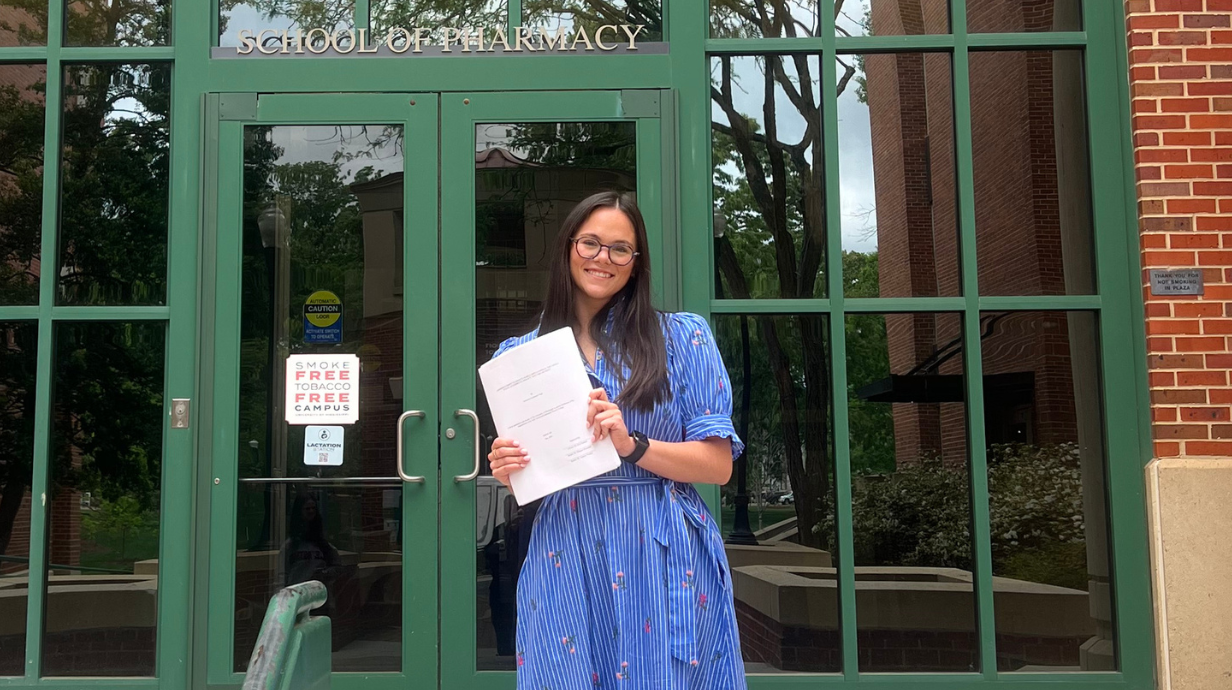
Oxford, Miss. – As telehealth becomes an increasingly common part of modern medicine, University of Mississippi School of Pharmacy student pharmacist Rosemary Fruge is researching how mobile applications are changing the way patients receive care, and what that means for privacy, accessibility and the future of health care.
Fruge’s honors thesis project focused on the rapidly expanding world of telehealth mobile apps, examining how digital health platforms operate and how patients interact with them. Her research, which explored hundreds of applications available through Apple and Google app stores, evaluated how telehealth services are presented to consumers and how effectively they meet patient needs.
Exploring a Rapidly Changing Industry
Fruge’s interest in telehealth research began as she noticed the growing popularity of online health platforms and virtual medical services following the COVID-19 pandemic.
“I looked into general health apps and how patients could get medication without physically seeing a doctor or being examined,” Fruge said. “Some of the available information was more than a decade old, and I was intrigued by what I could find as well as what I couldn’t find. That’s what led me to take a deep dive into telehealth.”
Fruge’s project analyzed 244 apps from the Google Play Store and 220 from Apple’s App Store. Using keyword searches and database research, she evaluated applications connected to physician practices, direct-to-consumer telehealth services and mental health care platforms. She examined a wide range of features, including app accessibility, cost, operating systems, privacy protections and HIPAA compliance.
“One thing I looked at was if telehealth market and treatment had changed in real time,” Fruge said. “It was fascinating and frustrating how quickly the market changes.”
Balancing Convenience and Caution
Throughout her research, Fruge discovered that telehealth apps vary significantly in quality, purpose and safety measures. Some platforms focus on connecting patients with licensed physicians for virtual appointments, while others provide wellness services, prescription management or mental health support.
She said one of telehealth’s greatest advantages is convenience, especially for patients in rural or underserved communities who may struggle to access care in person.
“Apps can often help with accessibility and convenience and reduce the need for in-person appointments without diminishing care,” Fruge said. “But patients should do the research into telehealth apps themselves, including factors such privacy practices, provider qualifications, prescribing practices, and overall quality and safety of care.”
Fruge discovered that many mobile applications allow prescriptions to be sent directly to local pharmacies, streamlining treatment for patients who may otherwise face transportation or scheduling barriers. Still, her research also revealed concerns about regulation, patient safety and transparency.
“One takeaway from researching the telehealth market was realizing that a lot can – and will – evolve, because these apps aren’t going way,” Fruge said. “I wanted to look at the big picture and provide information based on what’s out there so patients could pick a reputable app.”
Evaluating the Patient Experience
To assess the quality of telehealth platforms, Fruge used established evaluation tools and rating systems to study app performance and usability. The research emphasized consumer perspectives and explored how apps market themselves to users seeking quick and accessible care. However, the constant evolution of telehealth platforms made the project especially challenging because services, pricing and features frequently changed throughout the research process.
“It was interesting to see how so many of the apps changed focus so quickly,” Fruge said. “I would see an app targeting a specific health issue one day, then I’d revisit it and the app would be addressing a different condition that was more popular or getting more media attention.”
Faculty advisor Erin Holmes agreed.
“Telehealth often pivots and shifts to follow the money,” said Erin Holmes, professor of Pharmacy Administration and Research Professor in the Research Institute of Pharmaceutical Sciences. “This has been particularly true in the weight loss sector, where drugs initially developed to treat other conditions are repurposed.”
Looking Toward the Future of Telehealth
As telehealth continues to expand across the United States, Fruge believes mobile applications will remain an important tool in health care delivery. However, she said patients and providers must continue paying attention to issues involving privacy, quality and informed decision-making.
Her honors thesis contributes to broader conversations within pharmacy and health care education about how technology can improve patient outcomes while maintaining safe and ethical standards of care.
“There are a lot of unknowns about telehealth, and many times it’s up to the patient to read between the lines,” Holmes said. “Not only do you need to have vital information about the drugs, but you also need to know what’s going to happen to your personal information, what it might be used for and how it will be safeguarded.”
For Fruge, the project offered more than research experience. It provided insight into how rapidly evolving digital tools are transforming medicine — and how future health professionals can help patients navigate that changing landscape.
“It’s been six years since the onset of the pandemic and telehealth is booming, but there’s so much out there that it can be overwhelming,” she said. “We haven’t figured out all the capabilities and the drawbacks, but exploring it from a patient-centered perspective has been rewarding and shows that it’s helpful when utilized correctly.”
By
James Dowd
Campus
Published
June 03, 2026